

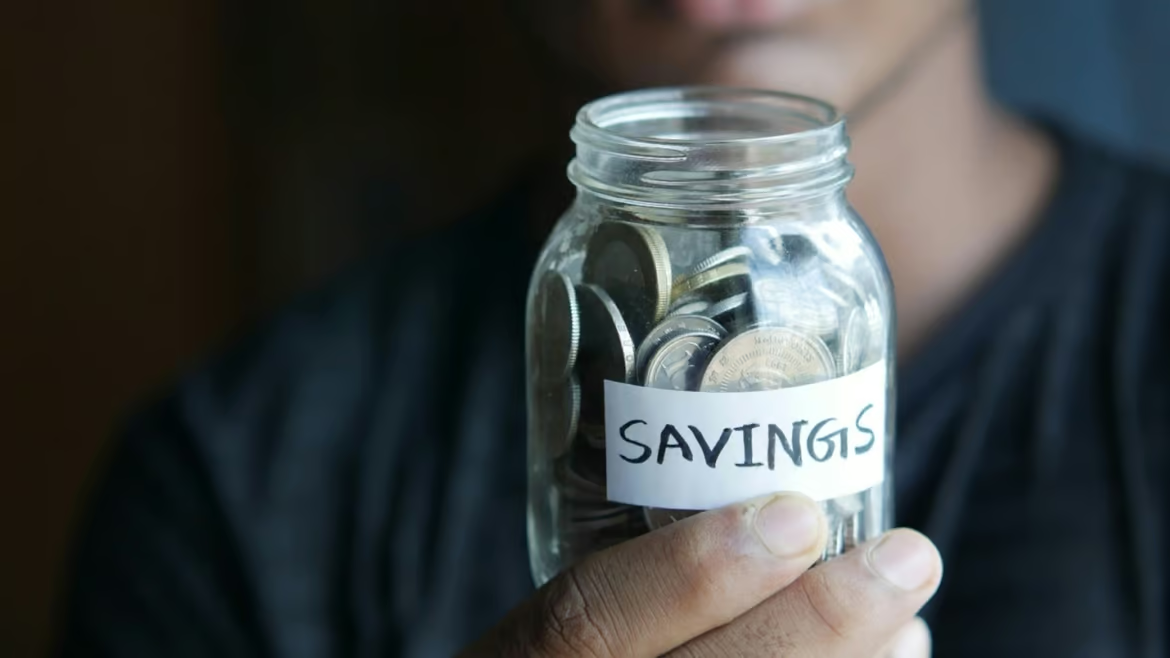
Photo by Towfiqu barbhuiya on Unsplash
Most financial advice online sounds unrealistic:
- “Save 6 months of expenses.”
- “Put away $500 right now.”
- “Build a $5,000 cushion.”
For many Californians, that advice feels out of reach. Rent alone can be $2,000–$3,000. Groceries keep climbing. Gas is unpredictable. No one has $500 sitting around “just in case.”
So let’s make this practical.
Let’s make it gentle.
Let’s make it doable.
This is your guide to building an emergency fund slowly, realistically, and without shame — even if you’re starting with $5 at a time.
- What an Emergency Fund Actually Is
An emergency fund is simply:
Money set aside to protect you from life’s surprises.
It is NOT:
- A sign of wealth
- A sign of perfect budgeting
- Something that has to grow overnight
It’s a gradual cushion that gives you peace of mind.
- Why Small Savings Matter More Than Big Ones
Here’s the truth:
Saving $5 consistently is better than saving $100 once.
Why?
- Small savings = repeatable
- Small savings = accessible
- Small savings = predictable
- Small savings don’t overwhelm your monthly bills
Small habits lead to big results.
- Why Saving Is So Hard in California Right Now
Let’s acknowledge the reality:
- Groceries cost more
- Rent is high
- Utilities fluctuate
- Wages have not kept up
- Emergencies feel constant
Saving isn’t hard because of poor choices — it’s hard because life is expensive.
This guide removes the pressure and focuses on what you can do, not what you “should” have done.
- Start With One Goal: $50
Not $500. Not $1,000.
Just $50.
Why?
- It feels achievable
- It builds confidence
- It reduces stress
- It creates momentum
Once you hit $50, move to the next milestone.
- The Step-By-Step Emergency Fund Plan
Step 1: Save $5–$10 a Week
Even if money is tight, $5 is doable.
Put it in:
- A separate savings account
- A cash envelope
- A prepaid card
- An online vault
The point is to separate it from your spending money.
Step 2: Build to $50
This cushion can cover:
- A small bill
- A co-pay
- A low-cost emergency
- A fee
- A school cost for kids
Reaching $50 shows you what’s possible.
Step 3: Grow From $50 to $150
Now you’re building stability.
At $150, you can handle:
- Gas during a tight week
- Minor car repairs
- Unexpected childcare needs
Step 4: Aim for $300
This is the point where an emergency fund really makes you feel safe.
$300 protects you from:
- Sudden bill spikes
- Bare-minimum car repair
- Last-minute travel
- Medical deductibles
- Utility disconnections
Step 5: Refill Whenever Life Happens
An emergency fund is not meant to sit untouched.
You will use it.
That’s the point.
Use it. Then refill it. No guilt.
- Where to Keep Your Emergency Fund
Choose somewhere that is:
✔ Safe
A bank savings account is ideal.
✔ Separate
So you don’t accidentally spend it.
✔ Easy to reach in a real emergency
But not too easy.
- How to Find $5–$10 a Week Without Feeling It
Here are gentle options:
- Use digital “round-up” savings
- Save leftover cash
- Skip 1 small subscription
- Choose a cheaper version of one item per grocery trip
- Sell something unused once a month
You do not have to cut everything — just find small pockets of opportunity.
- What NOT to Do When Building an Emergency Fund
Do NOT:
- Feel guilty if you can’t save every week
- Compare yourself to others
- Think you’re behind
- Try to save too aggressively and stress yourself
- Punish yourself for using the fund
Gentle progress is real progress.
- How to Protect Your Fund From Accidental Spending
Here are helpful rules:
- Keep it in a separate account.
- Name the account something emotional like “Peace of Mind.”
- Treat it as off-limits unless it’s truly needed.
- Set up automatic savings if possible (even $5).
- Celebrate Every Milestone
Celebrate:
- $20 saved
- $50 saved
- $75 saved
- $100 saved
- $300 saved
Small wins matter. They build confidence.
- When You Should Use Your Emergency Fund
Use it when:
- A bill is due before payday
- A car needs urgent repair
- A medical cost pops up
- A child needs something important
- You fall short on groceries
- A work expense arises unexpectedly
If it removes stress, it qualifies.
- What to Do After You Use It
Just refill it slowly.
No guilt. No pressure.
Even if you refill with:
- $5
- $10
- Spare change
- Unexpected refunds
- Cash gifts
It all counts.
- Emergency Fund vs. Long-Term Savings
These are two different things.
Emergency Fund = Protection
Short-term safety.
Long-Term Savings = Goals
Vacations, moving, bigger purchases.
Start with protection first.
- Why This “Gentle” Method Works
Because it’s:
- Realistic
- Flexible
- Encouraging
- Built around your real life
- Designed for rising California costs
- Sustainable long term
Saving shouldn’t feel like punishment. It should feel like security.
- Final Message: You Can Do This
You don’t need thousands of dollars to feel secure.
You don’t need perfect budgeting.
All you need is a gentle, realistic path forward.
If you ever want help reviewing your finances or planning ahead before applying for a loan, we’re here to support you — always without shame.
You’re doing your best.
Keep going, one small step at a time.
Even $5 matters.