

Summary
This comprehensive guide from Cash Now California explains how Californians can realistically build a $1,000 emergency fund despite high living costs. The article breaks down a practical 90-day savings strategy, shows readers how to calculate their essential monthly expenses, and offers step-by-step methods to automate savings, increase income, and avoid common financial setbacks. It also explains how a responsible payday lender in California can serve as a short-term bridge during unexpected emergencies while working toward long-term financial stability. Designed for moderate-income earners across California, this guide focuses on reducing financial stress, avoiding overdraft fees, and building a strong financial foundation through structured, achievable savings goals.
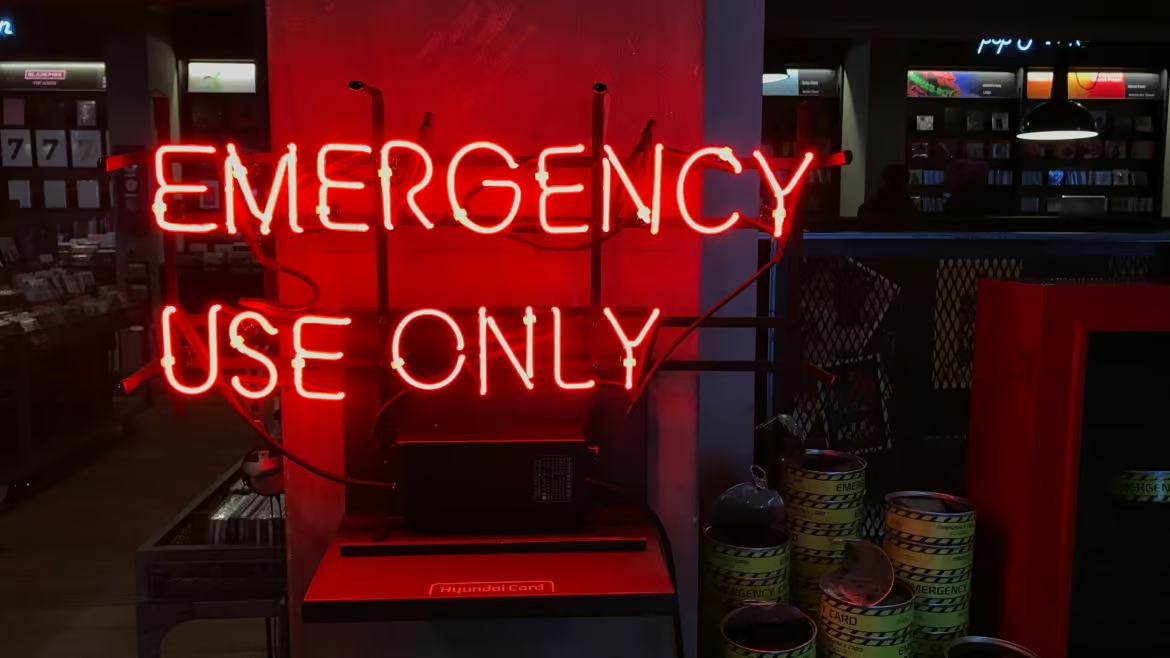
Photo by Jinsoo Choi on Unsplash
Living in California comes with incredible opportunity — and high expenses. Whether you’re in Los Angeles, Sacramento, Fresno, San Jose, or a smaller Central Valley city, the cost of living can make saving money feel overwhelming. That’s why building a $1,000 emergency fund is one of the smartest financial goals you can set.
At Cash Now California, we regularly speak with hardworking Californians who don’t struggle because they’re irresponsible — they struggle because unexpected expenses hit at the wrong time. A car repair, medical bill, or rent increase can derail even the most disciplined budget. A $1,000 emergency fund acts as a financial buffer between you and panic.
This guide will show you exactly how to build that fund realistically, even on a moderate income in California.
Why $1,000 Is the First Milestone
You may hear advice telling you to save 3–6 months of expenses. While that’s a long-term goal, it’s not where you start.
$1,000 is powerful because it covers:
- Car repairs
- Emergency travel
- Medical copays
- Utility catch-up payments
- Minor home repairs
- Avoiding overdraft fees
It prevents reliance on credit cards and reduces the need to visit a payday lender in California for smaller emergencies.
It’s not about becoming wealthy overnight. It’s about stability.
Step 1: Know Your “Bare Minimum” Monthly Number
Before saving, calculate your survival number.
List only essentials:
- Rent or mortgage
- Utilities
- Groceries
- Insurance
- Transportation
- Phone
Ignore subscriptions, eating out, and discretionary spending for this exercise.
If your bare minimum is $2,500 per month, then $1,000 covers about 40% of one essential month. That perspective makes the goal feel meaningful.
Step 2: Use the 90-Day Strategy
Instead of saying “I need $1,000,” break it into 90 days.
$1,000 ÷ 90 days = about $11 per day.
Or:
$1,000 ÷ 12 weeks = about $84 per week.
This is manageable for many moderate-income earners in California.
If that feels high, stretch it to 120 days.
Progress beats perfection.
Step 3: Automate It
The easiest way to build an emergency fund is to remove decision-making.
Set up:
- $50 per week auto-transfer
- Or $200 per paycheck
Even $25 per week builds $1,300 in a year.
The key is consistency.
Step 4: Increase Income Strategically
In high-cost states like California, cutting expenses alone isn’t enough.
Consider:
- Overtime shifts
- Temporary side gigs
- Selling unused items
- Skill-based freelance work
- Tax refunds directly into savings
Many customers who come to Cash Now California tell us they simply needed a temporary bridge between paydays. A structured savings plan reduces those moments over time.
Step 5: Avoid “Emergency Fund Leaks”
Your emergency fund is not for:
- Concert tickets
- Vacations
- Holiday shopping
- Dining out
It’s for true, unexpected expenses.
Keep it in a separate savings account to avoid temptation.
Step 6: Know When a Short-Term Loan Makes Sense
Even with discipline, emergencies happen before savings are complete.
If you’re building your fund but face an urgent need, a responsible payday lender in California can provide temporary relief. The key is:
- Borrow only what you need
- Have a clear repayment plan
- Continue building your emergency fund afterward
At Cash Now California, we always encourage long-term financial stability alongside short-term solutions.
Common Barriers (And Solutions)
“I Don’t Make Enough”
Even $10 per week builds momentum. Start small.
“Something Always Comes Up”
That’s exactly why you need the fund.
“It Feels Impossible in California”
High rent is real. Gas prices fluctuate. Groceries cost more.
But structured saving still works.
How to Stay Motivated
Track progress visually.
Use:
- A savings tracker
- A thermometer chart
- A digital spreadsheet
Watching the number grow builds confidence.
The Long-Term Impact
Once you hit $1,000:
- Financial anxiety decreases
- Decision-making improves
- You rely less on credit
- You reduce the need for a payday lender in California
From there, you can expand toward one month of expenses.
Final Thoughts
Building a $1,000 emergency fund in California is not about perfection — it’s about control.
Start small. Stay consistent. Protect your buffer.
Financial stability is built step by step.