

Summary
Rideshare services can be useful when a car is unavailable, a shift ends late, or public transit does not fit a work schedule. However, using Uber or Lyft as a daily commuting option can become expensive quickly. This guide helps Union City commuters compare rideshare with BART, bus, parking, and personal vehicle costs while deciding when rideshare is worth paying for.
Rideshare commuting, transportation costs, BART, bus, and household budgeting
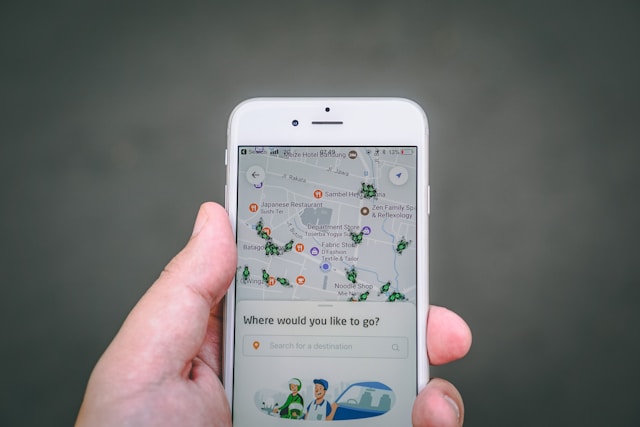
Photo by Fikri Rasyid on Unsplash
Rideshare services have made transportation more flexible.
A Union City resident can request a ride to work, BART, an appointment, or another Bay Area destination without owning a vehicle or waiting for a fixed bus schedule.
That convenience can be extremely useful.
The challenge is cost.
A rideshare trip that feels affordable once or twice may become a substantial household expense when repeated every workday.
Uber currently says the average price of a ride lasting about 17 minutes in Union City is approximately $21, while emphasizing that actual fares vary based on time, route, traffic, demand, and other factors. Lyft similarly explains that fare estimates depend on the route, ride type, driver availability, and demand, and that the final charge may differ from the estimate.
Those numbers should not be treated as guaranteed commute prices. They illustrate why workers should calculate the weekly and monthly cost before making rideshare a regular transportation habit.
What does a daily rideshare commute really cost?
Suppose a worker pays $21 each way.
That means:
- $21 going to work
- $21 coming home
- $42 per workday
Over five workdays:
$42 × 5 = $210 per week
Over four weeks:
$210 × 4 = $840
That is before optional tips or higher fares during periods of greater demand.
Even a shorter $15 ride each way would equal:
$30 per day × 5 days = $150 per week
Over four weeks, that becomes:
$600
The important habit is converting each ride into a monthly transportation number.
A $20 trip feels very different from an $800 monthly commuting category.
Rideshare prices can change from trip to trip
Unlike a fixed bus fare, rideshare prices may vary.
Uber says its app provides an estimated upfront price and notes that factors such as traffic, weather, and demand can affect pricing. Lyft says its estimates consider the route, ride type, availability, and demand.
That variability can make rideshare harder to budget for.
A worker may normally pay $18 for a ride and encounter a substantially higher price during:
- Rush hour
- Bad weather
- Major events
- Late-night periods
- Times when fewer drivers are available
Someone relying on rideshare to get to work should therefore budget above the lowest price normally seen in the app.
Compare rideshare with Union City BART
Union City has its own BART station, which gives many commuters another option.
BART currently lists daily parking at Union City station at $3.40, single/multi-day reserved parking at $5, and monthly reserved parking at $93.80.
A commuter who owns a vehicle might compare:
Gas to BART + $3.40 parking + BART fare
against:
Rideshare from home directly to work
The cheaper choice depends on the destination.
For someone commuting to San Francisco, Uber’s current route page estimates an average Union City-to-San Francisco ride at about $69 one way, though actual prices vary.
At that approximate price:
$69 × 2 = $138 per workday
A five-day week could approach:
$690
That demonstrates why long-distance rideshare may be better suited to occasional use rather than everyday commuting for many households.
Rideshare to BART may be a better middle ground
Rideshare does not have to replace public transit.
It can complement it.
For example:
Rideshare from home to Union City BART + BART to work
may cost significantly less than:
Rideshare from Union City directly to a distant workplace
This strategy may be useful when:
- Walking to BART is impractical.
- The household has only one vehicle.
- A spouse needs the family car.
- A bus connection does not fit the work schedule.
- The worker has luggage or equipment.
- Weather makes walking or biking difficult.
Compare the cost of the first-mile rideshare rather than automatically using rideshare for the entire commute.
Compare rideshare with AC Transit
AC Transit adult local fares effective July 1, 2026 are $2.75 using Clipper or contactless payment and $3.00 in cash. Local electronic fares can also reach automatic maximums of $6 per day, $27.50 per week, and $99 per month.
That creates a significant price difference for commuters whose routes are practical by bus.
A worker spending $20 each way on rideshare could pay approximately $40 per day.
A qualifying local AC Transit rider using electronic fare payment may reach a $6 daily maximum instead.
The tradeoff may be:
- Longer travel time
- Transfers
- Less flexibility
- Service-hour limitations
The cheapest transportation option must still allow the employee to arrive at work reliably.
When rideshare can make financial sense
Rideshare is not always a poor financial choice.
It may be valuable when used selectively.
Your car is temporarily unavailable
A $25 ride to work may be cheaper than losing an entire workday while the car is being repaired.
Your shift starts or ends outside normal transit hours
BART currently operates from 5 a.m. to midnight on weekdays, 6 a.m. to midnight Saturday, and 8 a.m. to midnight Sunday.
A worker whose shift falls outside practical transit hours may need another option.
Rideshare replaces a second household vehicle
A family may spend thousands of dollars each year on:
- Car payments
- Insurance
- Registration
- Gas
- Maintenance
- Repairs
If a second vehicle would be used only occasionally, rideshare plus transit could sometimes cost less overall.
The family should compare annual totals rather than only individual trips.
You need temporary transportation
Rideshare may work well for a week while:
- A vehicle is repaired.
- A family member is using the car.
- A commuter recovers from an injury.
- Transit service is disrupted.
BART periodically has planned service changes and bus bridges, including Union City-area disruptions. Checking the current schedule before commuting can help avoid unexpected transportation costs.
When daily rideshare becomes difficult for the budget
Rideshare may deserve another look when:
- It costs several hundred dollars each month.
- Fares frequently increase during commuting hours.
- The household is using credit to pay for rides.
- Rent or groceries are becoming harder to cover.
- Rides are being paid with cash advances.
- A transit alternative exists but has not been evaluated.
- Several family members use rideshare independently.
Track one full month.
Do not estimate from memory.
Add every Uber and Lyft transaction and compare that number with:
- BART
- Bus
- Driving
- Carpooling
- Employer commuter benefits
The result may be surprising.
Create a dedicated rideshare budget
If rideshare remains useful, create a specific monthly category.
For example:
Regular commuting: public transit
Rideshare allowance: $100 per month
Use the rideshare money for situations such as:
- Late work shifts
- Transit delays
- Medical appointments
- Bad weather
- Vehicle problems
Once the category is exhausted, return to the lower-cost transportation option unless the ride is genuinely necessary.
This allows the household to benefit from rideshare without letting it quietly become an unlimited expense.
Check both apps before booking
When both Uber and Lyft are available, compare their current estimates.
Uber provides estimated pricing before a request is made. Lyft also shows an estimated cost after the rider enters the pickup and destination.
A few dollars of difference on one trip may not matter.
Repeated across 20 workdays, it can.
Also compare:
- Pickup time
- Ride type
- Promotions
- Shared household benefits
- Employer transportation programs
Do not assume one provider is always less expensive.
Ask whether your employer offers commuter benefits
Some employers provide transportation benefits that can change the calculation.
Possible benefits may include:
- Transit subsidies
- Pre-tax commuter programs
- Employer shuttles
- Carpool programs
- Parking assistance
- Flexible schedules
- Remote-work days
A $100 monthly transit subsidy can make BART or bus dramatically more attractive than daily rideshare.
Check with human resources before assuming the household must pay the entire commute out of pocket.
Build an emergency transportation fund
Transportation is directly connected to income for many workers.
Consider building a small reserve specifically for:
- Emergency rideshare
- BART fares
- Bus fares
- Tire repairs
- Battery replacement
- Car repairs
Possible milestones:
- $50
- $100
- $250
The purpose is to prevent an unexpected transportation problem from forcing the household to choose between getting to work and paying another essential bill.
Do not borrow routinely for rideshare commuting
Using short-term financing repeatedly for ordinary rides to work may indicate that the transportation plan is not affordable.
A one-time transportation emergency is different.
For example, a worker whose car suddenly breaks down may need temporary transportation while a repair is completed.
But if rideshare costs exceed the household budget every month, borrowing simply moves that shortage into the next paycheck.
The better solution may involve:
- Transit
- Carpooling
- Employer benefits
- A different rideshare schedule
- A transportation sinking fund
- Adjusting other recurring expenses
The best option is the one that works financially and practically
Union City commuters have several transportation choices.
Rideshare offers convenience and flexibility.
BART and bus can provide lower-cost regional travel.
Driving can offer independence but carries substantial ownership costs.
No single option is automatically best for everyone.
Compare:
- Weekly cost
- Monthly cost
- Travel time
- Work schedule
- Childcare
- Reliability
- Parking
- Vehicle expenses
Cash Now California encourages commuters to treat transportation as an essential household category rather than a series of unrelated daily purchases.
When a genuine unexpected transportation expense creates a temporary financial gap, Cash Now California helps qualified California residents review available short-term funding options.
Approval is not guaranteed.
Review the full cost and repayment schedule carefully so a temporary transportation problem does not create a larger shortage on the next payday.